Typical installation labor
$1,500–$2,500Furnace changeout
Labor range only. Equipment, materials and property-specific work are priced separately.
View service
Historical 2026 Greater Cleveland HVAC pricing
Eternity reviewed six historical supplier estimates dated July through September 2026 and combined the relevant material total with a 15% markup and typical installation labor. Use the examples to plan, then request an on-site review for a final written proposal.
Typical installation labor
$1,500–$2,500
This is a planning figure for the scope shown—not a binding quote. Where the result is labor only, equipment, materials and added work remain separate. Eternity confirms every final price in a written proposal after reviewing the property.
Equipment behind the numbers
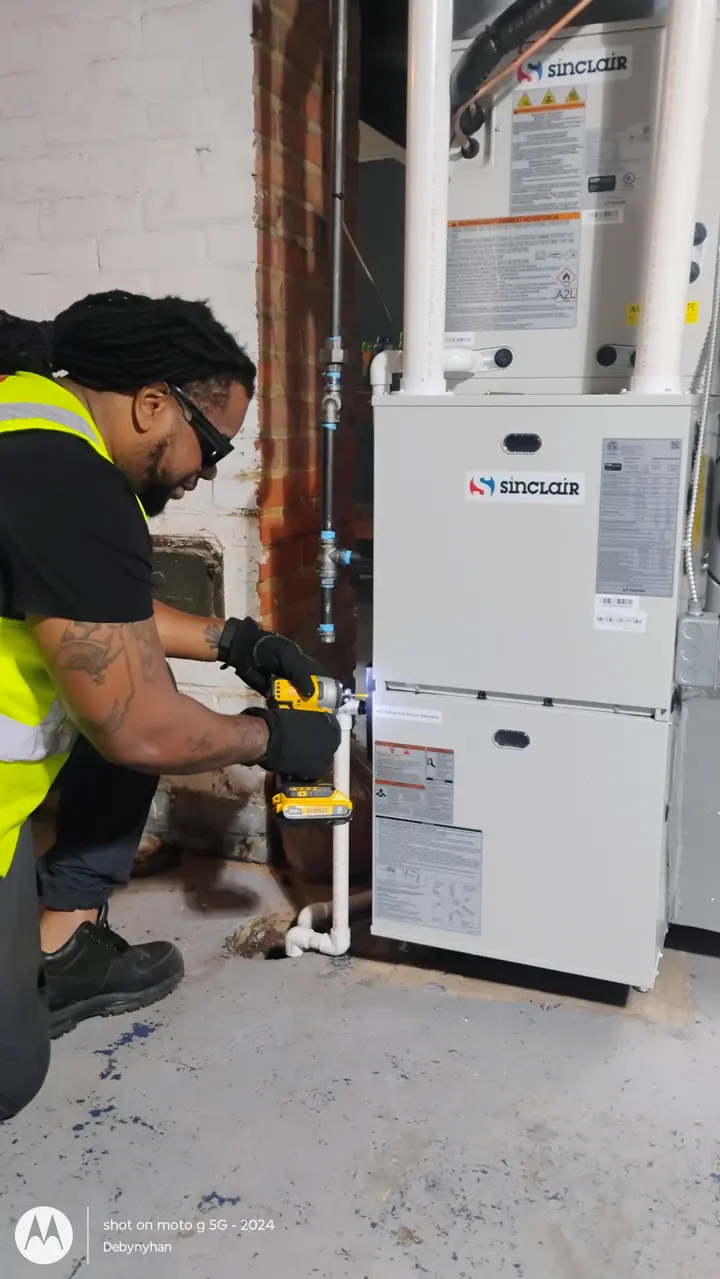
A furnace, outdoor unit and indoor coil are only part of the scope. The connections and existing conditions matter, too.
These are actual Eternity project photographs from Euclid—not illustrations of what every price includes.
Explore documented projects →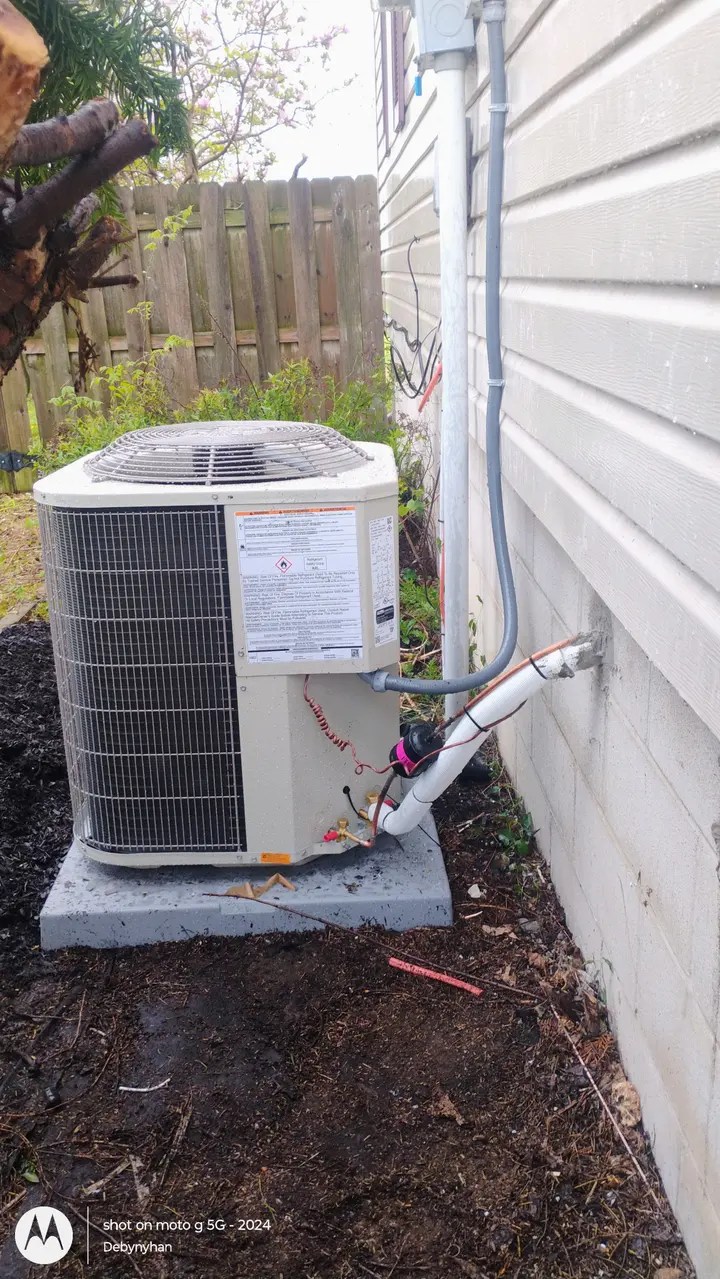
Greater Cleveland installation labor
Labor is shown separately so you can see what changes when equipment, efficiency and installation scope change.
Labor range only. Equipment, materials and property-specific work are priced separately.
View serviceHorizontal attic furnace, R-8 flex ductwork, B-vent roof penetration and utility extensions.
View serviceLabor range only. Equipment and marked-up materials depend on the selected system.
View serviceLabor range only. Condenser, matching coil and other materials are priced separately.
View serviceCommercial scope is based on verified capacity, controls, access and site requirements.
View serviceLabor ranges and established baselines are planning figures, not binding quotes. Equipment, materials, permits and unlisted work are separate unless the written proposal expressly includes them.
Real quote-based examples
These rounded examples come from six historical supplier estimates reviewed by Eternity. They show how different equipment selections can change an installed planning range without presenting old supplier pricing as a current offer.
| Historical configuration | Supplier estimate date | Installed planning estimate | Calculation basis |
|---|---|---|---|
| Goodman 2.5-ton complete system | July 2026 | $6,800–$8,800 | Historical landed materials with 15% markup, plus $3,000–$5,000 installation labor. |
| Ducane or Goodman 4-ton complete system | September 2026 | $9,300–$11,300 | Two separate historical configurations produced the same rounded planning range. |
| Lennox 4-ton complete-system configurations | September 2026 | $15,400–$17,600 | Two historical configurations including quoted freight, surcharges and supplier tax. |
| Payne 2.5-ton condenser and coil | August 2026 | $4,400–$5,400 | Per-system cooling-only example with 15% markup and $2,000–$3,000 installation labor. |
Planning disclosure: Equipment pricing and availability can change. Final price depends on capacity, efficiency, equipment match, existing ductwork and airflow, electrical work, venting, refrigerant piping, permits, access and other site conditions. Eternity confirms the final written proposal after an on-site review.
Included scope
Tap a project to see the published scope and what still needs confirmation. No specific brand, capacity, staging or warranty is promised unless listed in your written proposal.
The standard 80% AFUE swap covers complete unit removal, licensed installation, transition sheet metal and a safety test. Typical furnace-changeout installation labor is $1,500–$2,500; equipment, materials and any added scope make up the rest of the written proposal. Transition sheet metal connects the new unit to existing ducts; it does not mean a new whole-house duct system.
Confirm the model, capacity, venting condition, permit responsibility and any gas, electrical or return-air changes. A 96% AFUE furnace, two-stage burner or variable-speed blower is not automatically included.
The listed scope includes complete rough-in, a horizontal attic furnace, R-8 flex ductwork, B-vent roof penetration and utility extensions. The layout and equipment must be confirmed for the property.
Confirm rooms served, return-air routes, attic access, utility extension lengths and roof work. Boiler removal, changes to the remaining heating system, separate utility meters, structural work and finish repairs must be itemized rather than assumed included.
The quote-based examples cover different 2.5-ton and 4-ton configurations. Each rounded estimate combines the applicable historical landed material total, a 15% material markup and $3,000–$5,000 typical complete-system installation labor.
The written proposal must identify the selected equipment, removal, venting, line-set work, electrical work, controls, permits and startup scope. The broad example range shows why brand, capacity and exact scope must be compared rather than assumed.
The example identifies a Payne outdoor condenser and matching evaporator coil, not a replacement furnace. Its calculation combines the historical per-system material total, a 15% material markup and $2,000–$3,000 typical cooling-only installation labor.
Retained indoor equipment must be compatible. Confirm capacity, efficiency, refrigerant, indoor airflow, piping, drain arrangements, electrical requirements and thermostat compatibility in the written proposal.
No fixed RTU price is published. Equipment selection and the written scope depend on diagnostics, load requirements, roof access, curb compatibility, lifting, electrical service, controls and any required ventilation work.
What changes the price?
Use these questions to compare written proposals. None of these items has an automatic surcharge in this estimator; the site review determines what is needed and whether it is included.
Compare exact model numbers rather than brand names alone. Equipment lines within one brand can offer different controls, efficiency and warranty terms. Availability and service support also belong in the comparison.
Ask for separate equipment-parts and installation-labor warranty terms, registration requirements and exclusions. No brand or extended warranty is guaranteed by these baseline prices.
Single-stage heating has one firing level; two-stage equipment offers a lower and higher level. Modulating equipment adjusts output across a range. These are equipment choices, not interchangeable descriptions of efficiency.
Ask which firing stages are included and whether the thermostat and wiring support them. An 80% or 96% AFUE rating alone does not tell you the number of stages. No staging-upgrade price is published here.
A variable-speed indoor blower moves air; an inverter-driven compressor changes cooling or heat-pump capacity. They are different components. The words “variable speed” alone do not specify the whole system.
Ask for the outdoor unit, coil, indoor unit and controller models as a compatible package. Confirm whether the intended controls support the equipment’s capabilities and whether existing ductwork is suitable. Do not assume inverter equipment is included in a starting package.
Ask how the proposed capacity was determined instead of simply copying the old unit size. Room layout, insulation, windows, air leakage and duct capacity can affect the selection. More capacity is not automatically a better fit.
Identify any hot or cold rooms before the proposal. Zoning, added returns, filtration, humidification and thermostat upgrades should be separate, clearly described scope items.
The furnace-swap baseline explicitly includes a safety test. For every package, ask which startup checks, settings and written records will be supplied, who handles inspections, and how operating instructions and warranty documents will be handed over.
Compare these deliverables alongside equipment prices. Do not treat a general “installation included” label as a complete list of testing or warranty commitments.
The furnace baseline applies to 80% AFUE. A different efficiency, capacity or equipment package is a different comparison. Ask for model numbers, rated efficiency and how the equipment was sized. A higher-efficiency option may require different venting and condensate arrangements; no 96% price is implied by the standard-swap range.
A transition between the furnace and existing ductwork is not the same as replacing distribution ducts. Ask whether supply and return alterations are included and whether existing airflow will be evaluated. For the attic conversion, confirm the rooms served and the planned supply and return routes.
Compare the stated scope for venting, gas connections, electrical circuits and condensate disposal. Utility extensions are listed in the attic-conversion baseline, but their route and extent still need verification. Ask what work by other trades, utility providers or permitting authorities is included or excluded.
The cooling-only starting price describes an outdoor condenser and matching indoor coil—not an automatic replacement of the furnace. Confirm compatibility with the retained indoor equipment, refrigerant piping and controls. Ask whether line-set work or electrical changes are required.
The $6,800–$8,200 baseline describes the specified attic forced-air rough-in, not every possible boiler conversion. Confirm attic access, equipment location, duct routes, roof penetration and how the remaining boiler system will be handled. Separate tenant utility metering or utility-company charges must be addressed explicitly; do not assume they are included.
Ask how equipment will enter and leave the property, what removal is covered, who handles permits and inspections, and what is excluded. Tight access or work beyond the listed baseline can change the proposal. Commercial roof access and lifting requirements need project-specific review.
How the range is built
These planning prices reflect defined installation scopes—not a remote diagnosis or a one-size-fits-all quote.
The new examples start with a historical supplier estimate and the equipment and listed accessories it contained.
Eternity applies a 15% material markup and the applicable typical installation-labor range to build each example.
Eternity verifies capacity, compatibility and existing conditions before issuing a written proposal.
Already have a diagnosis or proposal? Use the private second-opinion workflow for an owner-reviewed comparison.
Common pricing questions
Eternity's historical supplier-based examples range from about $6,800 to $17,600 for complete furnace, condenser and coil configurations from 2.5 to 4 tons. The examples use a 15% material markup and $3,000–$5,000 of typical installation labor. They are planning examples rather than current supplier prices or binding proposals.
One historical 2.5-ton Payne cooling-only example calculates to about $4,400–$5,400 after the 15% material markup and $2,000–$3,000 typical installation labor. Capacity, equipment compatibility, refrigerant piping, electrical work and site conditions can change the final written proposal.
Typical furnace-changeout installation labor is $1,500–$2,500. Equipment, materials, permits and any added venting, gas, electrical, drain, duct or control work are separate unless the written proposal says otherwise. Eternity's established standard 80% AFUE direct-swap baseline remains $2,800–$3,400 for its defined scope.
The calculation is the historical landed supplier material total multiplied by 1.15, plus the applicable typical installation-labor range. The landed total includes the equipment and accessories on that supplier estimate, plus quoted freight, surcharges and supplier tax when present.
Capacity, efficiency, brand and equipment match can change material cost. Ductwork and airflow, electrical work, venting, refrigerant piping, permits, access and other property conditions can also change installation scope. Compare model numbers, written inclusions and exclusions instead of comparing only the total.
No. The examples are based on six historical supplier estimates dated July through September 2026. Equipment prices and availability may have changed. Eternity confirms current equipment, scope and final pricing in a written proposal after reviewing the property.
The estimated baseline range is $6,800–$8,200 for complete rough-in, a horizontal attic furnace, R-8 flex ductwork, a B-vent roof penetration and utility extensions. This configuration can help duplex investors separate tenant utilities.
Commercial rooftop equipment requires a diagnostic and load calculation because capacity, controls, roof access, utilities, curb conditions and operating requirements vary by property.